Richard Boll

Category Archives: Photography Projects

Planning a Multi-City Corporate Photography Shoot: What to Expect and How to Prepare

0
Filed under Corporate lifestyle photography, Corporate Photography, global brands, Location, Location Photography, Multi-City Corporate Photography, Photography Projects, Private Equity Photography, Travel logistics

Planning a Multi-City Corporate Photography Shoot: What to Expect and How to Prepare

Multi-city corporate photography shoots are a different proposition from a single-location commission. Knowing how to plan a corporate photography shoot across multiple offices requires a level of preparation that goes well beyond booking a photographer and confirming a date. The logistics are more complex, the margin for error is smaller, and the stakes are higher. When a business needs consistent, professional imagery across offices in different countries around the world in the same week, there is no room for an ad hoc approach. Whether you are commissioning corporate photography for the first time or managing a recurring programme of work, everything has to be planned before the shoots commence.

This is work I know well. Over more than twenty years as a corporate and commercial photographer based in London, I have carried out multi-location photography shoots across the UK, Europe, and the United States. My experience as a corporate photographer for financial services firms, private equity houses, and global brands includes work for Apple, Summit Partners, Ara Partners, and The Brunswick Group. As a corporate photographer with international experience working across London, Boston, Dublin, Helsinki, and beyond, I understand what it takes to deliver executive photography to a consistent standard regardless of location. What follows is a practical guide to how these projects work, and what clients can do to make them run smoothly.
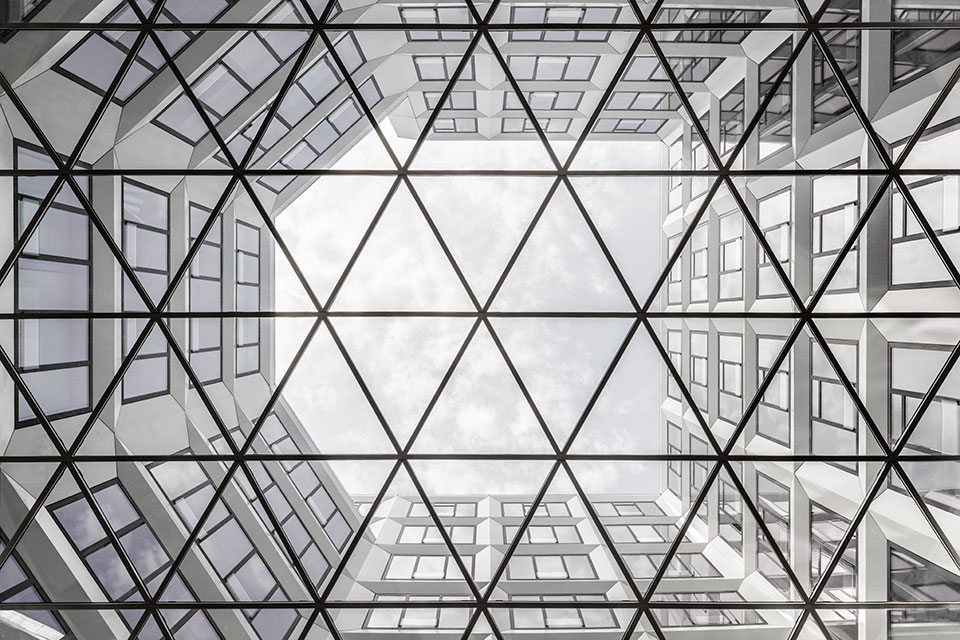
 

Corporate Architectural Photography in Paris by Richard Boll.

Start with a clear brief

A clear brief is fundamental to any multi-city photography project. Before any logistics are discussed, both photographer and client need to agree on exactly what is required: which offices, which people, what kind of imagery, and where it will be used. A corporate headshot library for a financial services firm has different requirements from a campaign to show company culture across a global business. The clearer the brief, the more efficiently everything else falls into place.
Usage rights matter here too. Images used across multiple jurisdictions, in annual reports, on websites, in press materials, may have different licensing requirements. This should be agreed upfront, not revisited after the shoot.

The brief should also include brand guidelines. If a company has specific requirements around colour, tone, or visual style, those are required before I begin scouting locations or planning lighting. Visual consistency across cities does not happen by accident. It is built into the preparation.
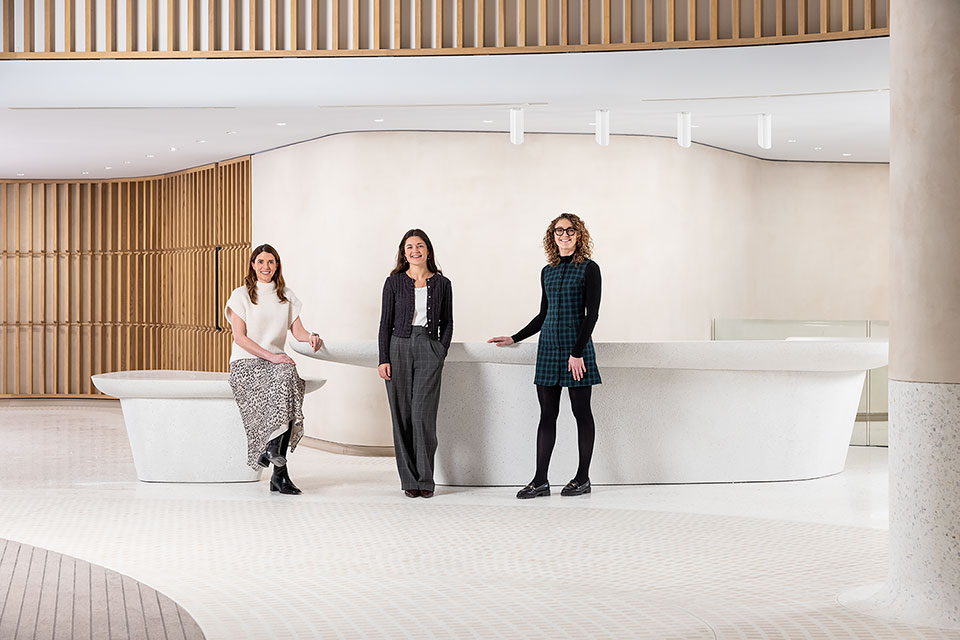
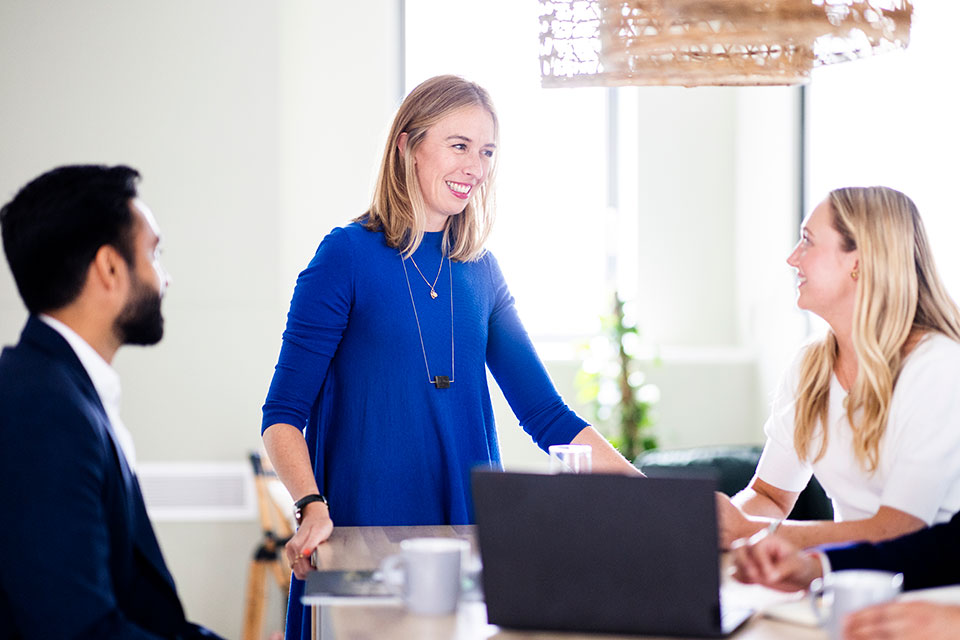
A corporate portrait of three staff members in an interior space in London. Image captured by Richard Boll Photography.

Location logistics and scheduling for multi-city corporate photography

Once the brief is fixed, the practical planning begins. Multi-city shoots require careful scheduling, particularly when subjects are senior executives whose time is tightly managed. A clear, realistic shoot schedule sent to every office in advance is the foundation the whole project rests upon.

Location scouting matters more than many clients realise. The same brief can produce very different results depending on the environment. A glass-walled meeting room in a London office may work beautifully. The equivalent space in Boston may face entirely different light conditions at the same time of day. I work to understand each location in advance, whether through a site visit, detailed photography from the client’s facilities team, or both, so that when I arrive, I am not problem-solving from scratch.

Travel logistics need to be treated with the same seriousness as the photography itself. Equipment needs to clear customs, hotels need to be near the offices, and there needs to be buffer time between locations. A delayed flight that eats into a shoot day is a real risk on a multi-city project. The schedule needs to account for it.
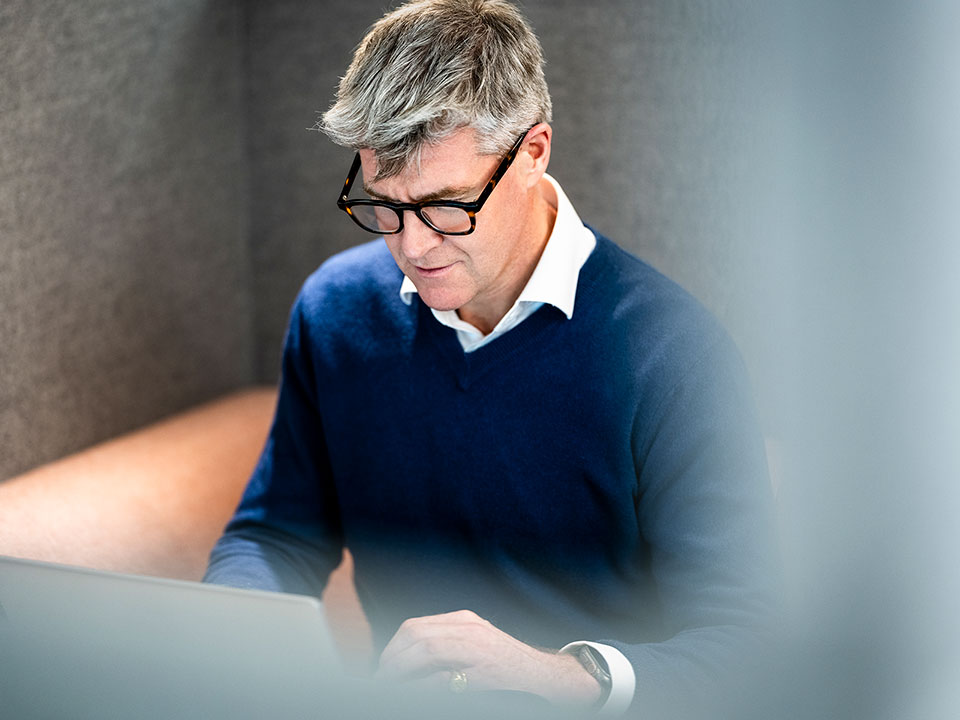
A man working at a laptop in a corporate office in London. Image by Richard Boll Photography.

Preparation for the subjects

The photography can only as good as the preparation of the people being photographed. This is especially true in corporate work, where subjects are often busy, and not always accustomed to being in front of a camera.
A briefing note sent to all subjects in advance makes a significant difference. It should cover what to wear, what to avoid, how long they will be needed, and what to expect on the day. Guidance on clothing is worth taking seriously: patterns, logos, and very pale colours can all cause problems on camera. A small amount of preparation avoids a lot of time wasted on the day.

For senior executives in particular, I find a short pre-shoot conversation useful. Not a formal briefing, just a few minutes to establish rapport and manage expectations. People photograph better when they are relaxed, and they are more relaxed when they know what is going to happen.

When multiple offices are involved, it helps to designate a point of contact at each location. Someone who knows the building, can manage the schedule on the ground, and can help with access and logistics. This person does not need to be a photographer or a creative professional. They just need to be organised and responsive.

Maintaining consistency across locations

The central challenge of multi-city corporate photography is visual consistency. Clients commission this kind of project because they want their London office and their Boston office to look like they belong to the same company. That requires deliberate effort.

I carry a consistent lighting setup between locations and reference the brief and any approved test images throughout the shoot. Where possible, I use similar spaces in each office, similar backgrounds, similar framing. The aim is not for identical images, but a coherent visual language that reads as a single body of work, regardless of where each image was made.

Post-production plays a role here too. Editing for consistency across a multi-city project is not simply a question of applying the same preset to every image. It requires careful judgement, comparing images across locations and making adjustments that account for different light conditions and environments while preserving a unified look.
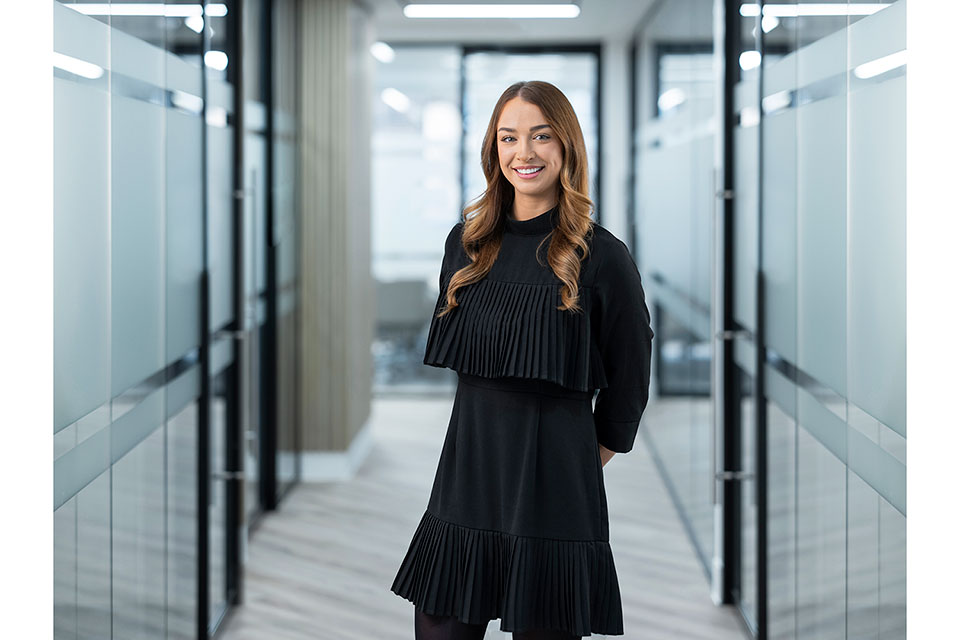
A corporate shoot at a London office. Glass-walled meeting spaces are on either side of the member of staff, who is dressed all in black. Image by Richard Boll.

After the shoot

Delivery timelines for multi-city projects need to be agreed in advance. A large shoot across four cities will generate a significant number of selects, and the editing process takes time. Clients should expect a realistic turnaround, not a rushed job.
A structured delivery, whether by location, by subject, or by intended use, makes the images easier for the client to manage. Clear file naming, correct colour profiles, and the right resolution for each intended use are all part of a professional handover.

Why experience is the deciding factor

Multi-city corporate photography is a job for a photographer with suitable previous experience. The planning is demanding, the logistics are unforgiving, and the expectation of consistent, high-quality results across every location is required. See examples from my corporate photography portfolio here.

The clearest measure of a photographer’s suitability for this kind of work is a track record of doing it, consistently, for repeat clients. The Brunswick Group, one of the world’s leading financial communications agencies, has commissioned me consistently for more than ten years across multiple senior clients and multiple cities. Summit Partners has trusted me for more than five years across London, Boston, and Menlo Park. Apple has commissioned me to deliver consistent work across London, Stuttgart, Düsseldorf, and Helsinki.

These are not projects where reliability and quality are assumed. They are projects where both are tested, and where the relationship only continues if the standard is met.
If you are planning a multi-location corporate photography shoot and would like to discuss how to approach it, I would be glad to hear from you. Get in touch here.
The Portrait Photographer Irving Penn

0
Filed under Advertising Photography, Commercial Photography, Editorial Photography, Editorial Portrait, Fine Art Photography, Photography Projects, Portrait Photography

When I first began exploring the world of photography during my studies in 1996, one name that stood out for me was the portrait photographer Irving Penn. His extraordinary vision and impeccable technique, particularly in portraiture and still life, captivated my imagination when I first saw his work whilst studying photography at Edinburgh College of Art.

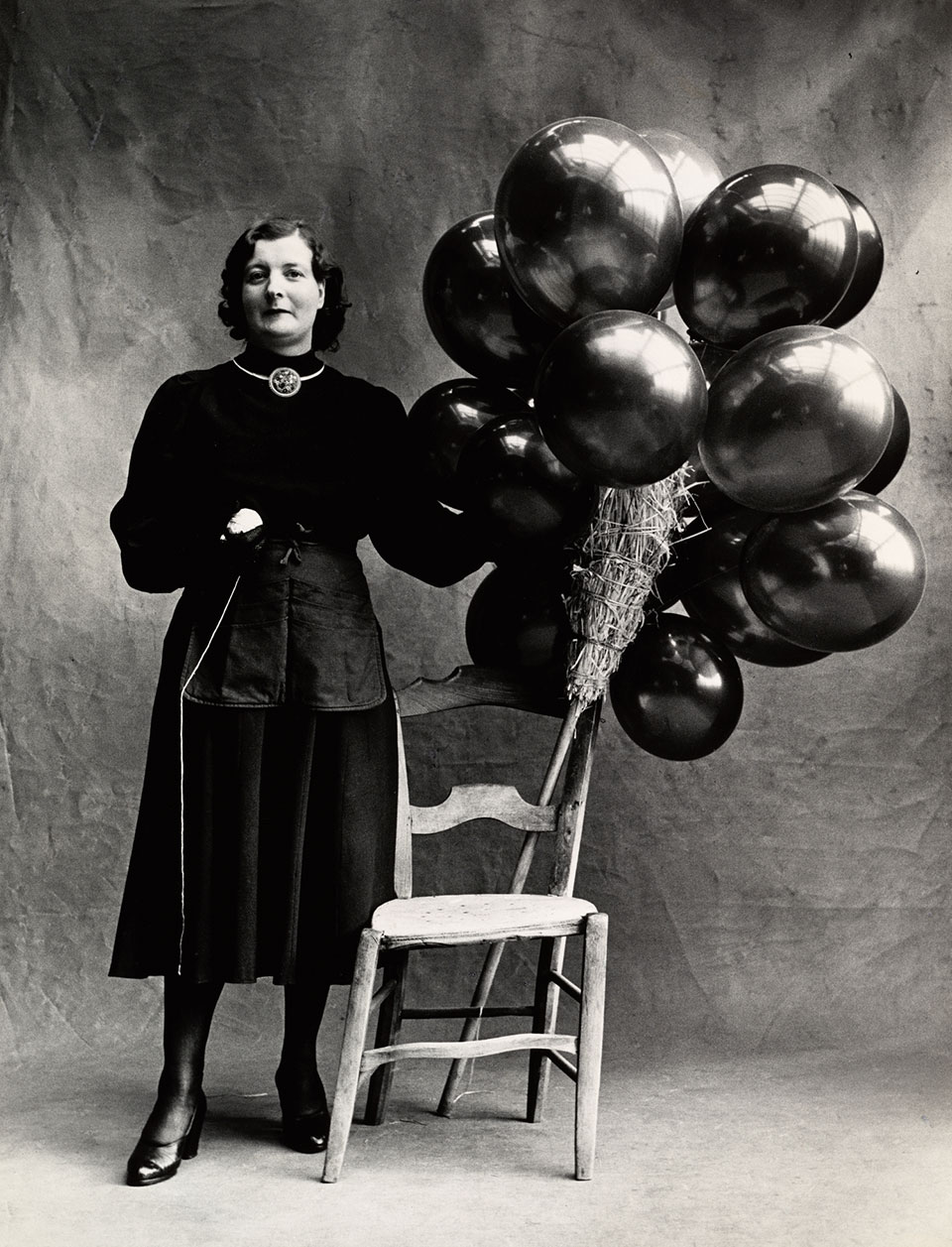
Penn was renowned for his meticulous, minimalist approach. Whether photographing high fashion for Vogue or creating intimate portraits of cultural icons, his work consistently exuded elegance and simplicity. One of his most iconic projects, Small Trades (1950-51), left a lasting impression on me. The series documented tradespeople, bakers, butchers, and florists, in their work attire, set against a plain backdrop. Penn’s ability as a portrait photographer to distill the essence of his subjects into striking, timeless images became a significant inspiration for me.

A portrait of a woman holding a bunch of balloons by Irving Penn.

Marchande de Ballons (B), Paris, 1950 [Balloon Seller]

Irving Penn’s Remarkable Career

Throughout his prolific career, Penn seamlessly bridged the realms of fashion, fine art, and editorial photography. His work featured an extraordinary range of subjects, from portraits of artists and writers to fashion as well as still life images that felt remarkably ahead of their time. What struck me was how he balanced his highly personal creative projects with demanding commercial assignments for Vogue and other high-profile clients.

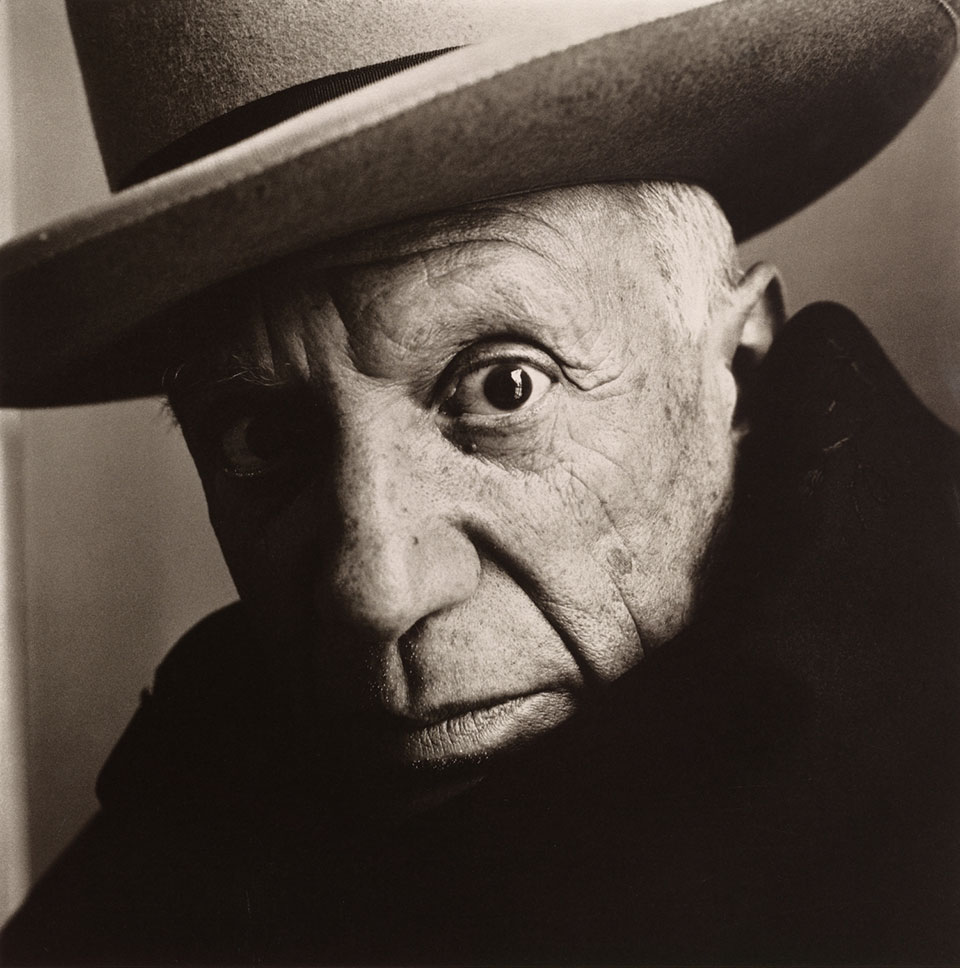
Penn’s distinctive use of natural light and neutral backdrops created a timeless quality in his portraits. He captured subjects such as Pablo Picasso, Audrey Hepburn, and Truman Capote with a sense of intimacy that revealed their character in a captivating and poetic way. This unique ability to present his subjects as both individuals and symbols of their era turned his photography into a profound document of the 20th century.

A portrait of Pablo Picasso by Irving Penn.

Pablo Picasso at La Californie, Cannes, 1957

Penn’s Personal Projects: A Deep Inspiration

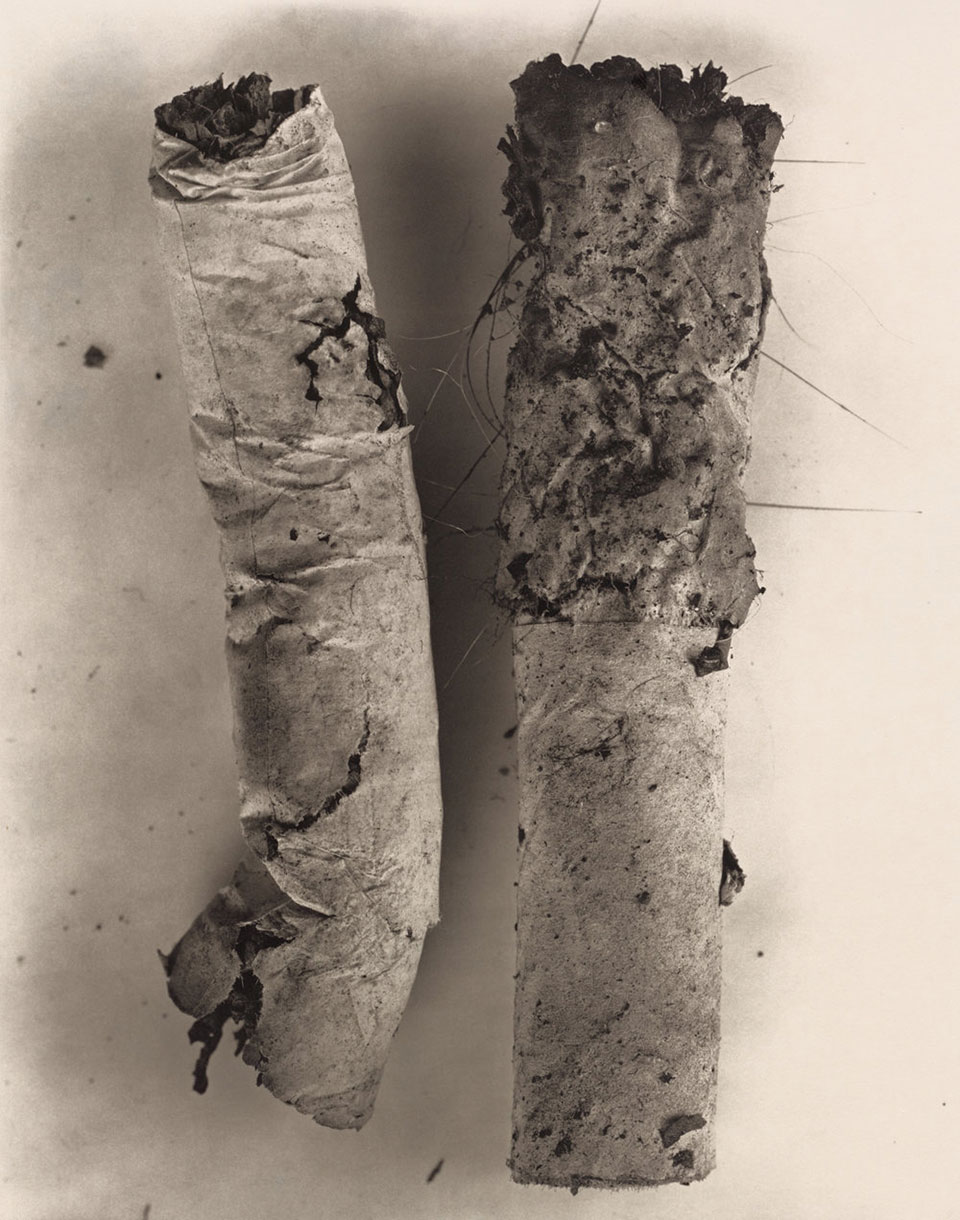
In addition to his commercial work, Penn was deeply committed to his personal projects, which often reflected his interest in culture, craftsmanship, and nature. He created striking still-life images that transformed the subjects—cigarette butts, bones, or flowers—into compositions of remarkable beauty. These works taught me to find inspiration in the seemingly mundane and to approach every subject with curiosity and reflection.

Close-up photograph of Cigarettes by Irving Penn.

Cigarette No. 17, New York, 1972

I strive to maintain a balance between my personal and commissioned work and his approach reminds me that photography can be a form of introspection and discovery, whether the work is of a commercial nature or taken as part of a personal project. This philosophy continues to influence my current work, including my portrait series on UK visual artists.

Who Was Irving Penn?

Born on June 16, 1917, in Plainfield, New Jersey, Irving Penn initially pursued painting at the Philadelphia Museum School of Industrial Art. However, his fascination with photography led him to a lifelong career in the medium. After working as an assistant to Alexey Brodovitch, the legendary art director of Harper’s Bazaar, Penn joined Vogue in 1943. He quickly became one of the most influential photographers of his time, pioneering a style defined by simplicity and precision.

Penn’s contribution to fashion photography was transformative. Unlike his contemporaries who often relied on elaborate sets, Penn photographed his subjects against austere backdrops, allowing their personality and the artistry of the clothing to clearly stand out. Over the years, he pushed the boundaries of the genre with bold compositions and dynamic poses.

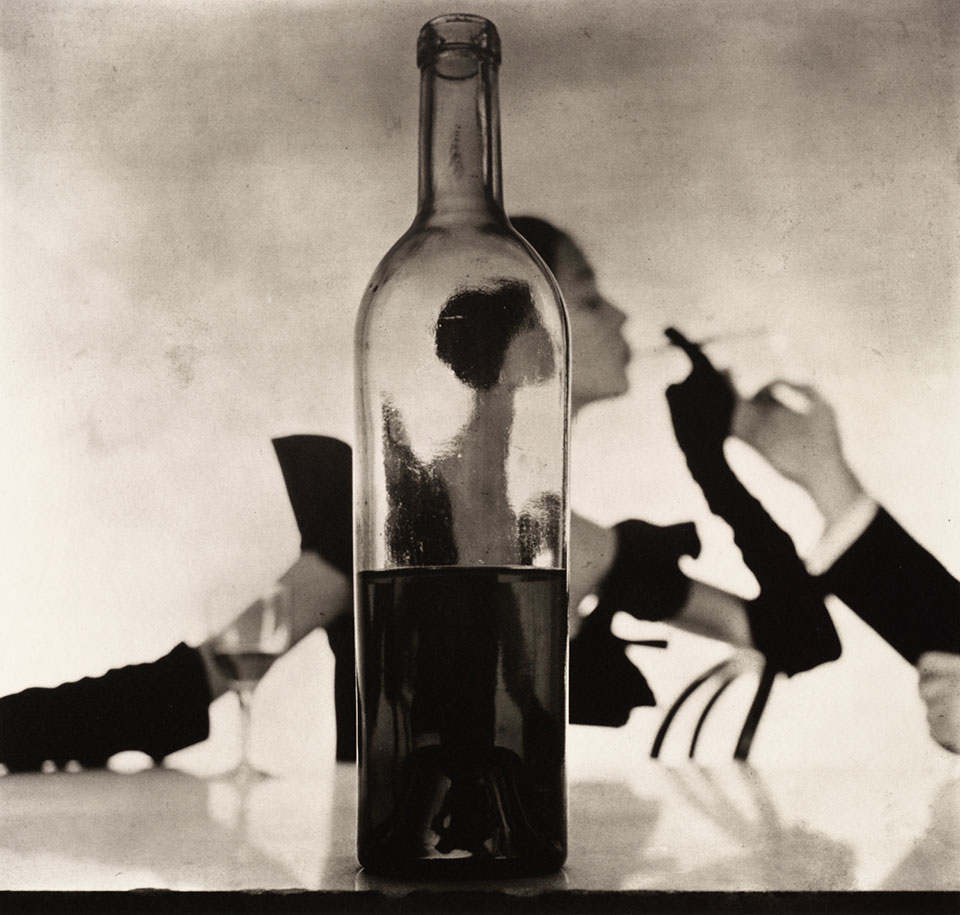
A woman photographed through a wine bottle by Irving Penn.

Man Lighting Girl’s Cigarette (Jean Patchett), New York, 1949

Legacy and Lessons from Penn

Irving Penn believed that photography was a deeply personal art form. His body of work is a testament to this ethos, blending technical precision with emotional depth.
Penn’s ability to elevate photography into a form of fine art has had a profound impact on generations of photographers. His work continues to inspire me to seek simplicity, authenticity, and beauty in the images I take.
To delve deeper into Irving Penn’s legacy, explore resources such as the Irving Penn Foundation or retrospective exhibitions that celebrate his enduring contributions to the art of photography.

See some of my portrait photography here, and a post about my recent project of portraits of UK artists here.

Five Favourite Photography Projects from 2023

0
Filed under Advertising, Advertising Photography, Commercial Photography, Corporate headshot photography London, Corporate Photography, Editorial Portrait, Fine Art Photography, Luxury product photography, Photography Projects

2023 gifted me with interesting and varied photographic shoots from still life to portrait, to corporate headshots and lifestyle photography. Here, I share five of my favourite photography projects from last year and the story behind each image.

Memento I – Still-life Photography

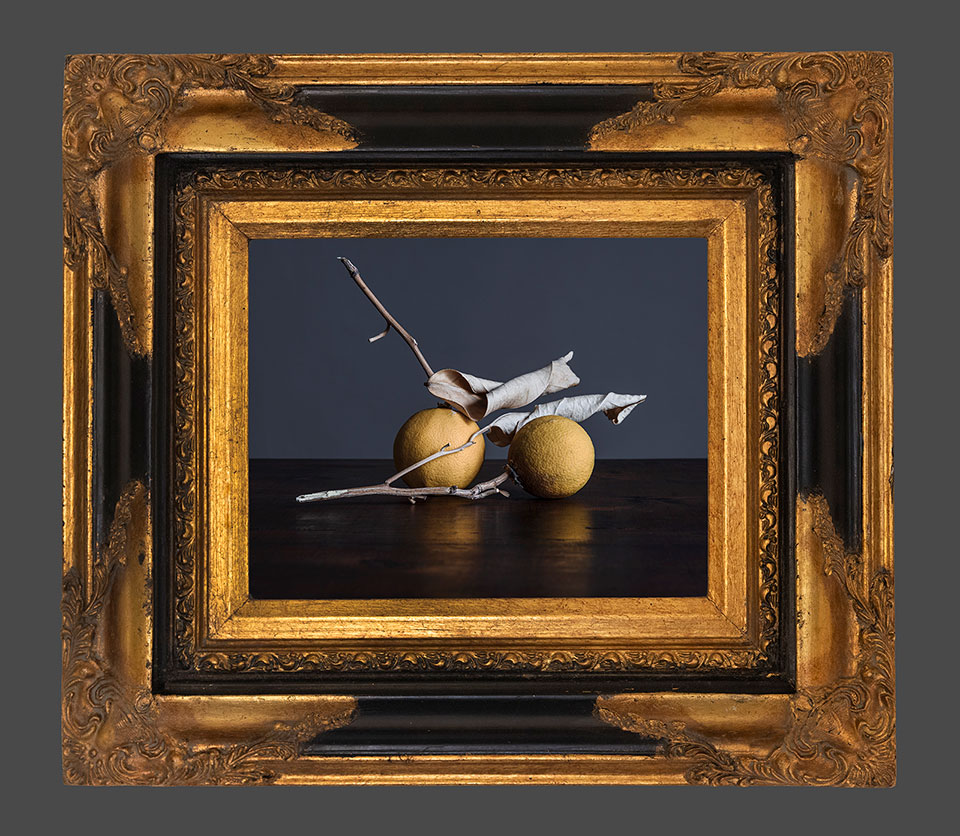
Fine art still life photography by Richard Boll from the project Memento.

In September, I stayed in a villa in the mountains of Majorca. Whilst there, I turned the spare room into an improvised photographic studio. It was a great space to work in as I could use the existing shutters and curtains to precisely control the level of daylight.

I explored the grounds of the villa for objects to use in a still-life project and found some citrus fruit in various states of decay. I loved the beautiful colours of the rotting fruit that went from almost black to deep purple through to burnt orange.

This still life photography project was inspired by Memento mori, an element of visual language used in classical painting for centuries to remind the viewer of their mortality.

I placed the images into antique picture frames as a reference to classical painting and successfully entered it into the South West Academy Open Exhibition in Sidmouth, Devon. A series of 10 photographs from this project were also entered into the Sony World Photography Awards.

2. Yarli Allison – Visual Artist Portrait Photography

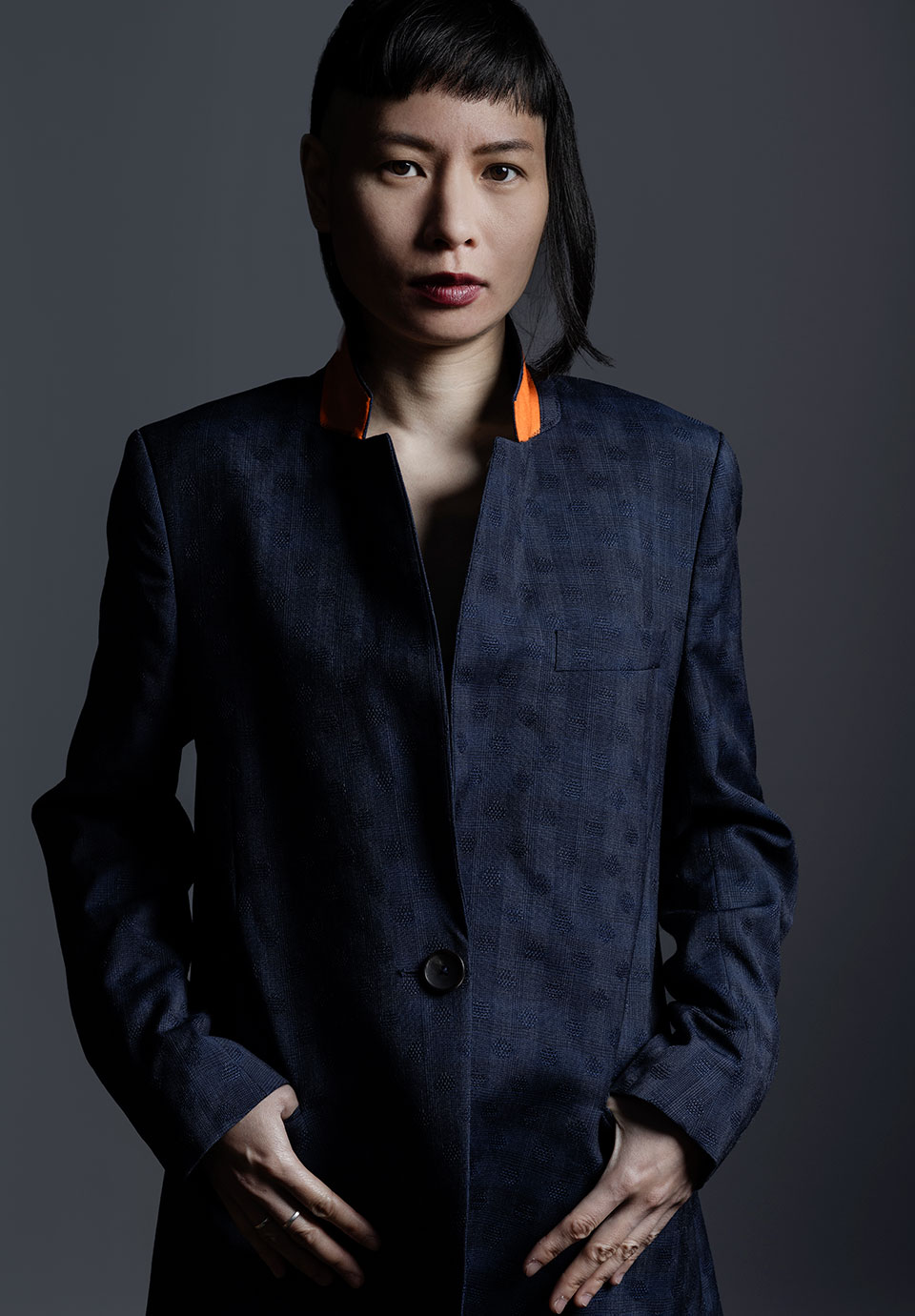
A photographic portrait of the fine artist Yarli Allison taken in her studio in London.

Yarli Allison is an artist born in Canada, raised in Hong Kong and is currently based in London and Paris. Her artistry uses an interdisciplinary approach that crosses sculpture, installation, CGI, moving image, drawing, poetry, tattoo, and performance.

She has been a subject for a personal project I started in 2022, producing portraits of Visual Artists. As part of this project, I shot some studio portraits in a suitable space in her London studio. Allison organised her wardrobe, choosing a range of different outfits to wear. It was a collaborative and creative process working with Yarli, making mutually agreed decisions on ideas and approaches for the shoot.
It was particularly satisfying to have time to play and experiment with lighting and different approaches to portraiture with such a great artist.

This portrait of Yarli is one of my favourite images from the shoot. I love her wardrobe choice and I feel the image captures her profound strength of character and identity. You can see some of Yarli’s work on her website here.

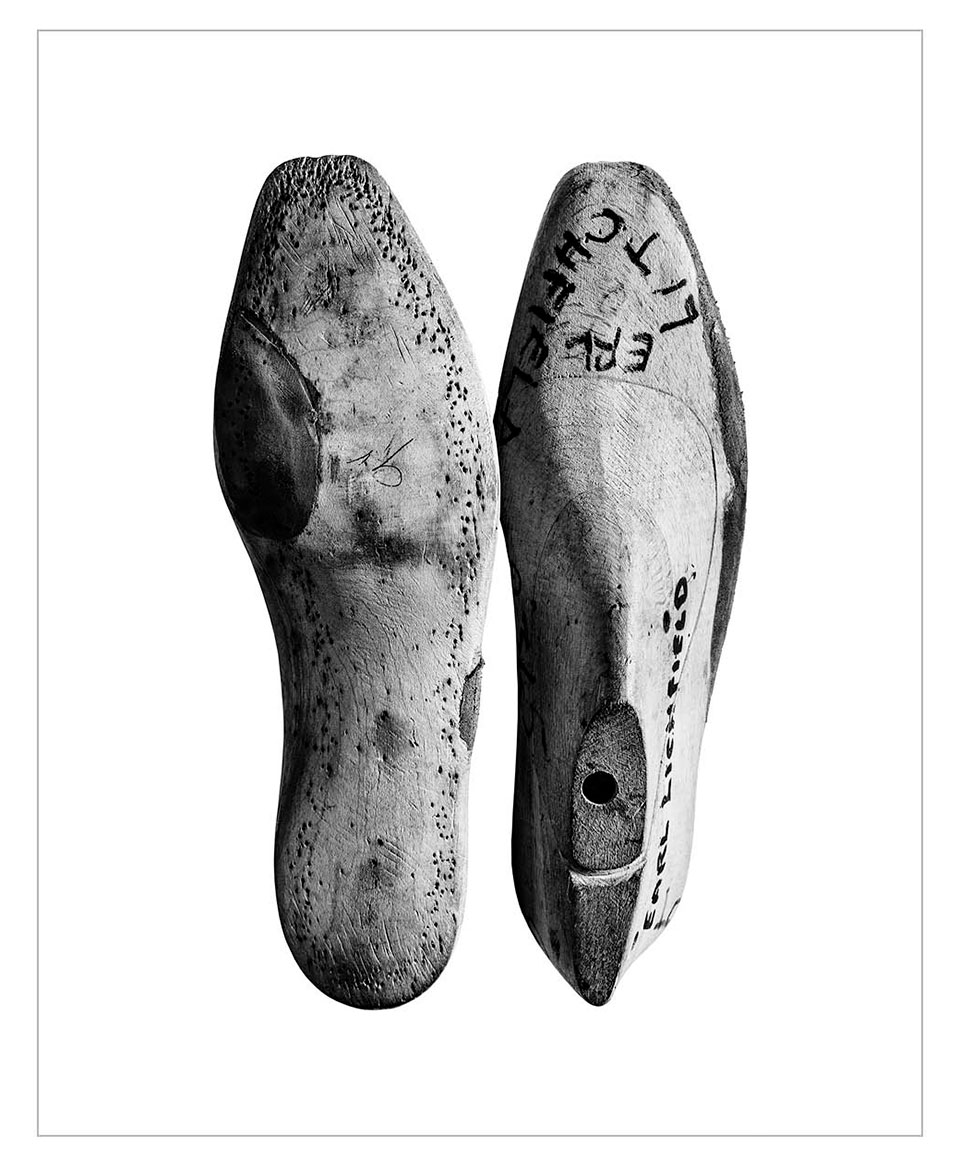
3. The lasts of Thomas Patrick John Anson, 5th Earl of Lichfield – Still Life Photography

Fine art still-life photograph of the John Lobb wooden lasts of the 5th Earl of Lichfield.

John Lobb have been crafting exquisite bespoke footwear and leather goods for Royalty and celebrities alike for over 170 years. Central to their process is a pair of unique wooden lasts made to the exact specifications of the wearers’ feet.
In 1863, John Lobb received its first Royal Warrant after crafting a pair of riding boots for the then Prince of Wales. Since then, they have continued to craft bespoke footwear for ongoing generations of Royalty.

As part of a long-term project, I photographed the complete collection of significant John Lobb wooden lasts. It was great to photograph the lasts of Thomas Patrick John Anson, 5th Earl of Lichfield as part of the project. Known as Patrick Lichfield in his professional life, he joined the Grenadier Guards in 1959 and on leaving the Army in 1962, he began to work as a photographer’s assistant. He was asked to take the photographs of the wedding of the Prince and Princess of Wales in 1981, and went on to become one of the UK’s best-known photographers.

I used the same technical approach for this image as for the other photographs in the project, incorporating focus stacking to achieve a sharp image throughout the depth of field, from the top to the bottom of the wooden last. You can see more images from the project here. Original limited edition prints can be purchased here.

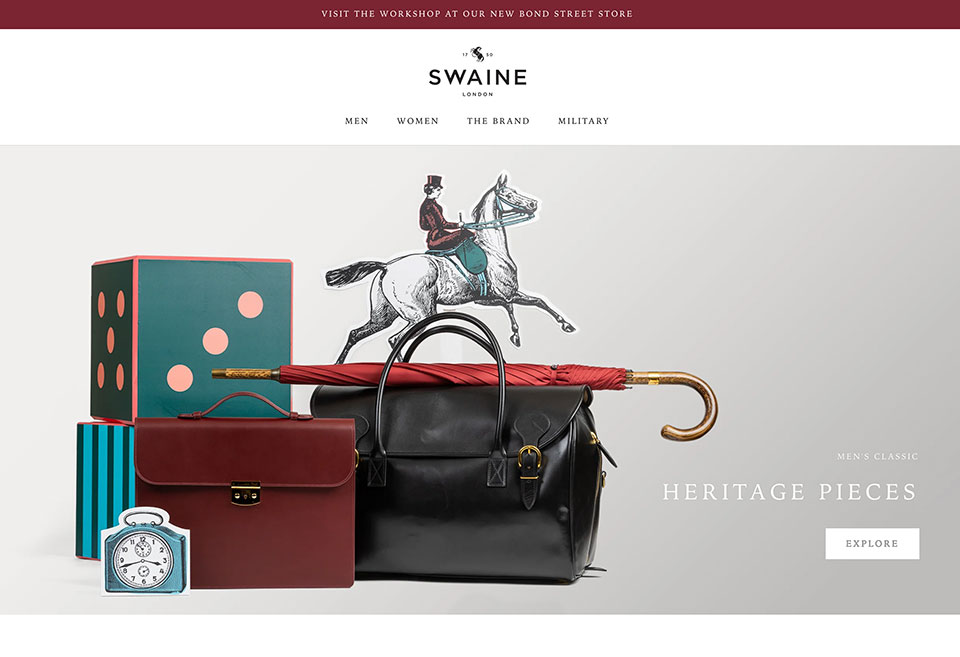
4. Swaine London 1750 – Still Life Product Photography

Still life product photography of luxury bags and an umbrella for The House of Swaine.

Swaine London, established in 1750, is one of the oldest and most prestigious luxury brands in the world, providing the finest handcrafted leather goods, hats, and umbrellas and supplying to the TV and movie industries since the 1950s. For example, Swaine have supplied Poet hats for every Indiana Jones film, including the original Herbert Johnson hat worn by Harrison Ford in ‘Raiders of the Lost Ark’ in 1981.

Swaine have commissioned my work as a luxury product photographer for a range of projects. This image featured on their website was from a shoot for their Christmas promotional campaign photographing a range of luxury leather products arranged into a still-life image. The shoot was a collaborative team effort working with the Art Directors from Swaine.

5. Newcore Capital – Corporate Lifestyle & Headshot Photography

Corporate lifestyle photograph taken for Newcore Capital in London by Richard Boll Photography.

Newcore Capital was founded in 2011 and is a Certified B Corporation. As a specialist investor in social infrastructure real estate in the UK, Newcore invests in assets that are integral to the needs of society. I’ve been commissioned to photograph several corporate portrait and lifestyle projects for Newcore Capital in the past.

In 2023, I carried out two Newcore corporate photography projects. The first was a corporate lifestyle shoot in the summer, and a range of different shots of staff in informal meetings were set up. It was an enjoyable and productive shoot, making the most of the natural daylight that was available.

The second shoot was a large-scale corporate headshot shoot at their London offices, producing headshots of every current employee in the company. You can see more of my corporate photography here.

See more photography projects I shot in 2023 including Derwent London and the OXO Tower Restaurant, Bar and Brasserie.

Managing Large Scale International Corporate Headshot and Lifestyle Photography Projects

0
Filed under Corporate headshot photography London, lifestyle Photography, Photography Projects

Large Scale Corporate Photography Projects

Over the years, I’ve managed several large-scale corporate headshot, portrait, and lifestyle photography projects for companies such as Citibank, T. Rowe Price, Lazard Bank, Octopus Energy and American Express. I’ve carried out different types of photographic shoots in locations including Bolivia, Dubai, San Francisco, Boston, Helsinki, Stuttgart, Dusseldorf, and Paris.

Corporate clients commission the corporate photography to use extensively:

– throughout their website
– in magazines, promotional materials, and blog posts
– in press releases and presentations
– on social media
– for internal use

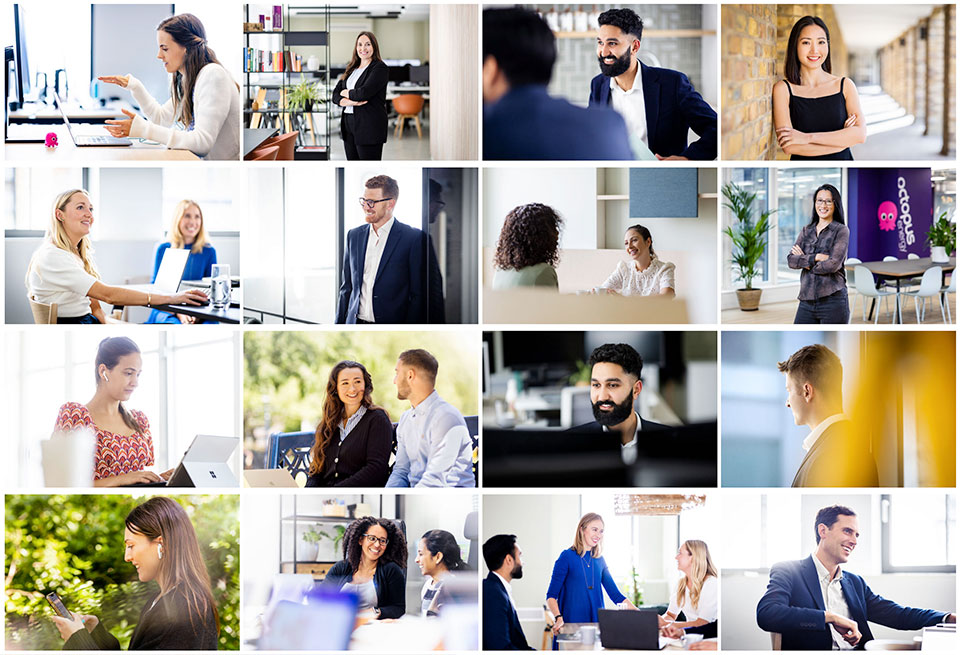
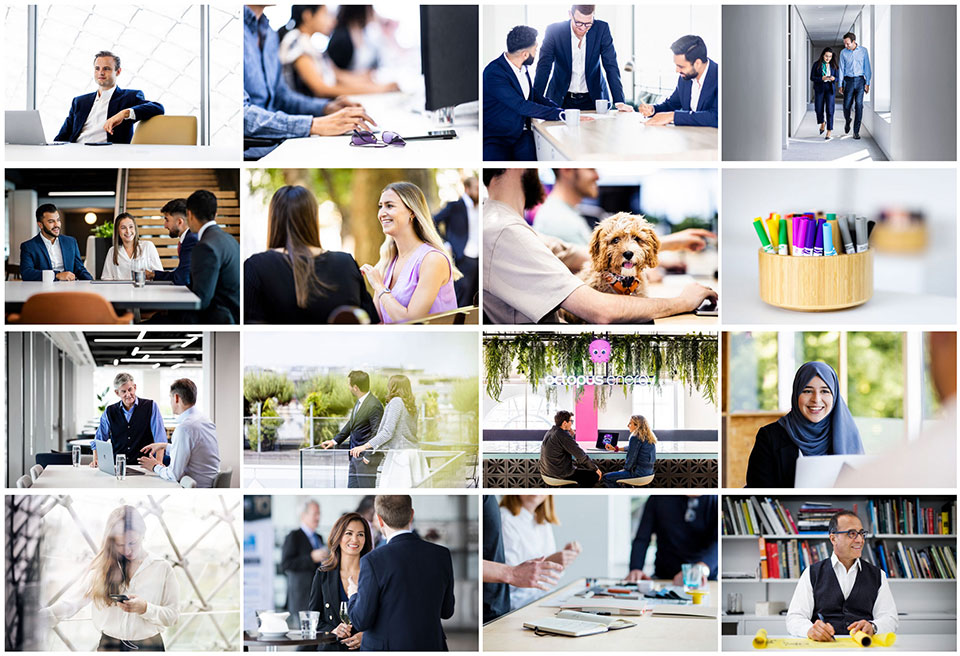
Compilation of corporate photography examples taken by Richard Boll.

Most shoots take place in London and throughout the UK, but I often travel abroad to photograph employees at their partner offices too. As you can imagine, there are many moving parts involved in organising a large-scale, international corporate photography shoot. Depending on the complexity of the project and the number of locations, it can take several weeks to organise. Here, I share my process and how I manage global shoots for corporate headshots, portrait, and lifestyle images on a significant scale.

Pre-planning & Project Management

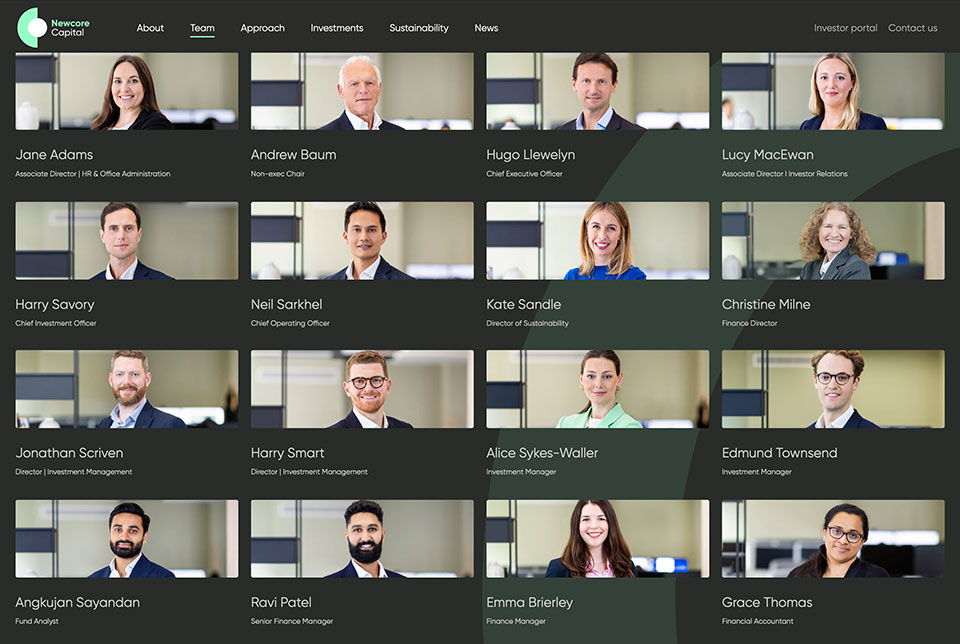
– Client Brief: One or more online meetings may take place to discuss a client’s desired images. Headshots are typically requested for between 50 and 200 people. Most clients request a uniform, formal, and professional result against the same background. This background can be a paper backdrop or the interior space of an office. An advantage of the paper backdrop option is that the look and feel of the portraits can be unified from shoots in different offices in different countries. Sometimes a client will request spontaneous corporate lifestyle images taken in specific locations around an office, showing people working at their desks, socialising, or having meetings.

An example of a page of uniform headshots taken by Richard Boll.

– Timetables: I work closely with internal office managers to line up diaries of the employees being photographed. These tend to be extremely busy people who travel regularly, and inevitably, they’re not all going to be available on the same day and in the same week. I often have to revisit locations to photograph people missed from the original shoot.

– Sourcing Locations: A significant amount of time is spent finding suitable locations for the shots. The client can do a walk around of their office spaces and remotely show me still images and videos that they’ve shot. Between us, we roughly work out an initial approach but typically, an in-person recce of the locations is also required.

– Recce Time: If I have to travel to another country, I tend to book in time the day before the shoot to come to an office to carry out a recce with the client, to look around their building, to find specific backgrounds that will be effective. Often, a client requests headshots taken in the same location, whereas some clients want a range of different backgrounds to generate variety within the shots. Depending on the nature of the offices it can be a challenge to find a range of backgrounds that are a) available and b) look good for the headshots.

A variety of examples of corporate headshot and lifestyle photography produced by Richard Boll.

– Flights & Hotels: Booking flights and hotels for multi-location shoots can be a time-consuming task. Flight times have to tie in with different time zones and shooting dates, sometimes allowing sufficient time to recover from jet lag.

– Transporting Equipment: Transporting photography equipment internationally can become a complex process. Considerations include ensuring that cameras, lenses, and lighting equipment are packed securely, to avoid damage. Lithium batteries have their particular packing requirements for flights regarding the number of batteries allowed and whether they must be taken within carry-on luggage as opposed to going in the hold. For some countries, paperwork must be completed for equipment to be taken through customs, and failure to do so can result in some or all of the equipment being seized until permissions have been cleared.

– Digital Operators: Typically, I will source digital operators to work with me on these shoots. In most situations, my camera is tethered to a laptop attached to a large screen, so the client can view the images as they’re being produced. The digital operator will create multiple backups of all content taken and label the files as we shoot. They will also create multiple formats, for example, low-resolution JPEGs for selection purposes, and high-resolution TIFFs and RAW files for retouching later.

– Sourcing Professionals: I can also be responsible for sourcing, managing, and paying suitable professionals for multiple shoots in each location, e.g. lighting assistants, hair stylists, and make-up artists.

– Supplying images: After the shoot, the client is supplied with low-resolution images to make final selections. I’ll typically send 30-40 shots of each person and the client will narrow these down to approximately 5 shots to show the individual. One or two final images per person are typically selected for optimisation.

An example of corporate lifestyle photography carried out in London by Richard Boll.

– Retouching: Retouching selected images is a significant task in each large-scale project. I could easily end up shooting over 200 headshot and lifestyle images that all need to be optimised and refined afterward. This is a process I can complete for a client although this is often carried out in-house by the client.

Email richard@richardbollphotography.com to discuss your next large-scale corporate photography project. See more corporate portrait and lifestyle images I’ve shot here.

.